Freshly added to the library
From a molten ball of rock to the species writing this. The major milestones — the Moon-forming impact, the first cells, the oxygenation event, Snowball Earth, the Cambrian explosion — and the real gaps between them.
Ranked by apparent magnitude — brightness as seen from Earth, not true luminosity. Sirius leads because it is close; Deneb makes the list from hundreds of times farther away.
Eleven times wider than Earth, yet it turns once every 9 hours 55 minutes. Why Jupiter spins so fast — and what slowed it down.
The smallest planet and the closest to the Sun, where a day outlasts a year and the day-night temperature gap reaches 600°C.
The ecliptic is the Sun's yearly path across the celestial sphere. Under the modern definition of constellation boundaries it crosses thirteen of them, not twelve.
Both act at a distance, both propagate as fields, both weaken with range. But one arises from mass and the other only from moving charge — and that difference decides whether a planet keeps its atmosphere.
Earth's twin in size, yet 464°C at the surface under 92 times our pressure - Venus shows how far a climate can slide.
Liquid water, an oxygen-rich atmosphere, a protective magnetosphere and plate tectonics - four rare conditions on one world.
It once had rivers, lakes and perhaps an ocean. Understanding how Mars lost its water is understanding how a world stops being habitable.
More massive than every other planet combined times 2.5, with a Great Red Spot storm at least 350 years old.
Rings spanning hundreds of thousands of kilometres yet ten metres thick in places, plus Enceladus venting salty water into space.
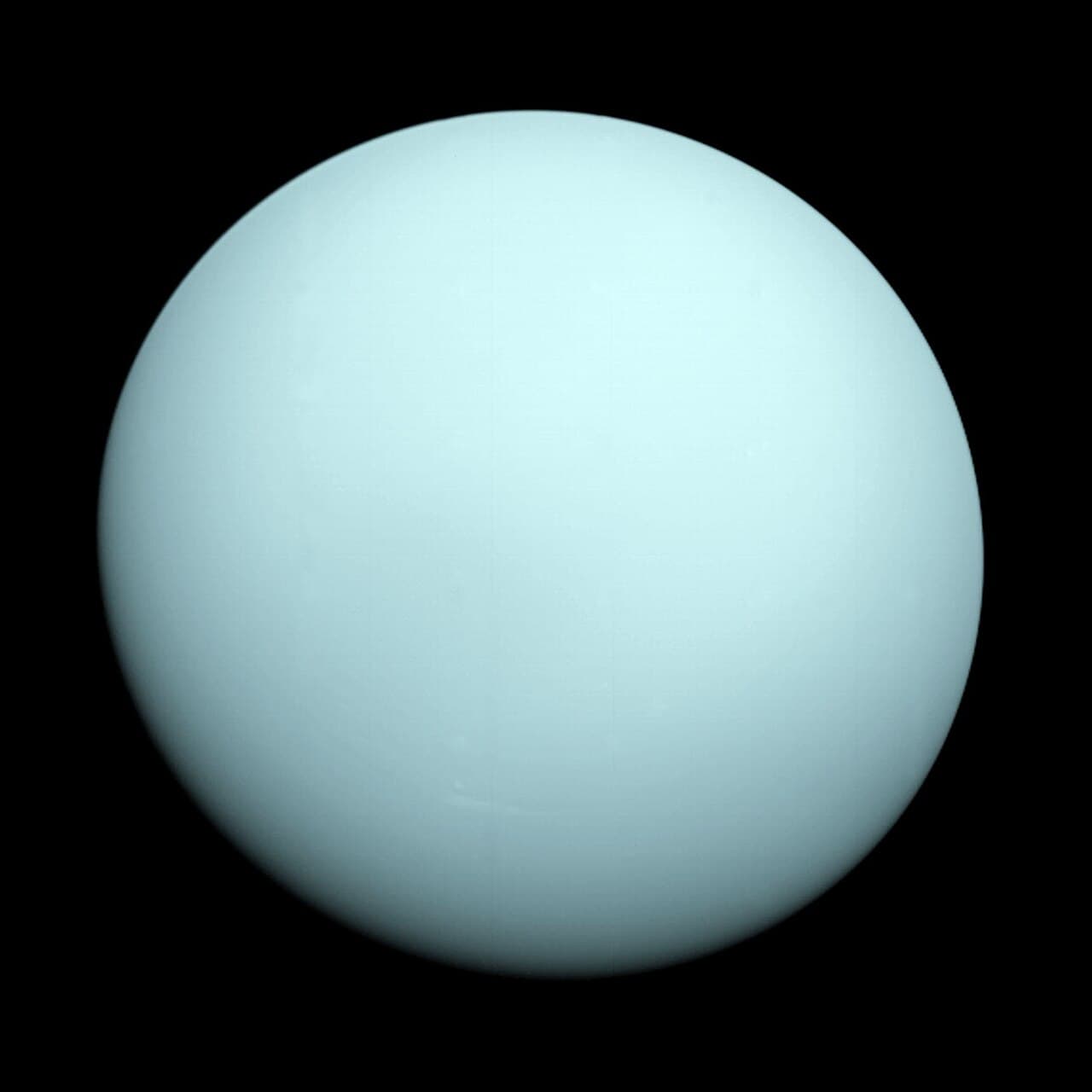
A 98° axial tilt gives each pole 42 years of continuous daylight followed by 42 years of night.