5 articles
Geology, oceans, atmosphere and a climate system in transition.
Subtopics
Wind, tides, and ocean currents are familiar Earth phenomena that profoundly influence climate, weather, and marine ecosystems. But what drives these massive movements?
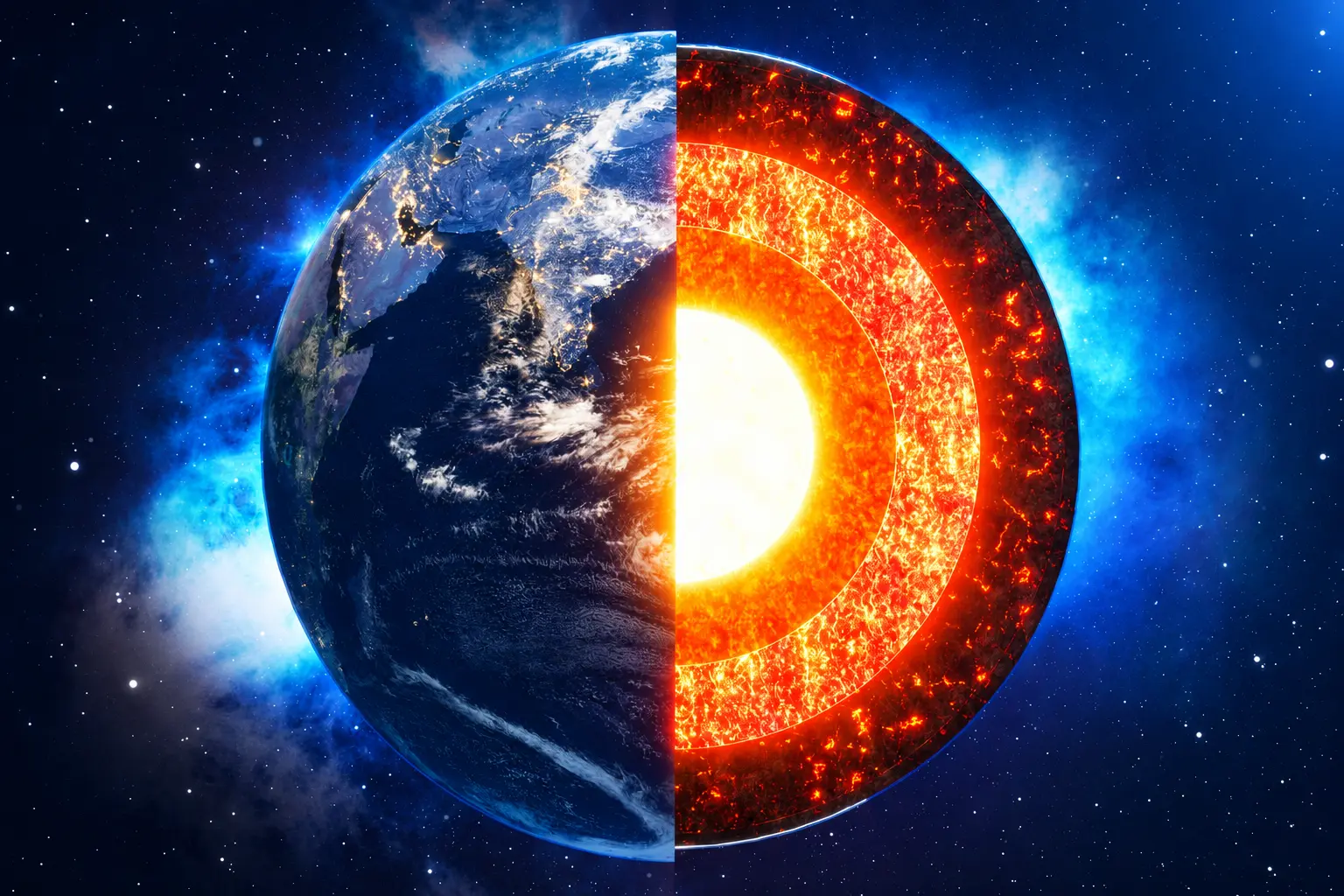
By chemical composition Earth has three layers — crust, mantle and core — but the core splits into a liquid outer core and a solid inner core. Only the crust is within reach: the Kola borehole reached 12 km and never crossed the crust–mantle boundary. The rest is reconstructed from seismic waves and from rock compressed at high pressure, following USGS, NASA, IRIS and Anzellini and colleagues (2013).
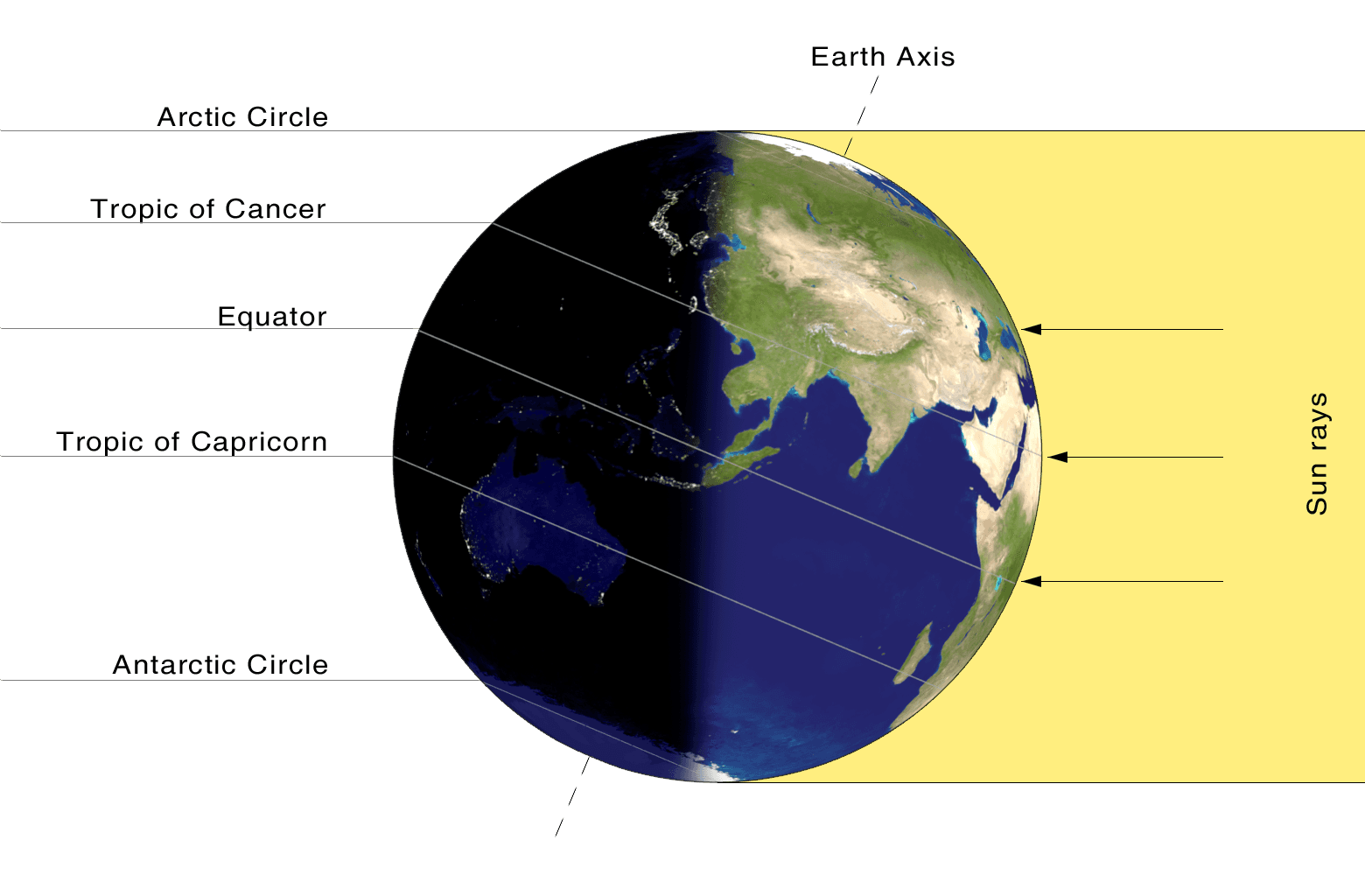
Earth is closest to the Sun in early January — the middle of the northern winter. Seasons come not from how much energy arrives but from how the 23.44° axial tilt distributes it between hemispheres and across the year.
252 million years ago, about 80% of marine species vanished within tens of thousands of years. The culprit was not an impact but a volcanic province that erupted for hundreds of thousands of years in what is now Siberia.
From a molten ball of rock to the species writing this. The major milestones — the Moon-forming impact, the first cells, the oxygenation event, Snowball Earth, the Cambrian explosion — and the real gaps between them.