Contents
The extinction event everyone knows is the one 66 million years ago, when an asteroid ended the reign of the dinosaurs. But that was not the largest one. The largest occurred nearly 190 million years before that, and it almost wiped out complex life from this planet.
Scale
The Permian mass extinction—also known as the Permian–Triassic boundary—occurred about 252 million years ago, marking the end of the Paleozoic Era and the beginning of the Mesozoic Era.
Current estimates based on fossil statistics show that:
- About 80% of marine species disappeared
- About 70% of terrestrial vertebrate species disappeared
- This is the only time in history that insects also suffered a mass extinction
No other event in the past 540 million years has come close to that level. Marine ecosystems took about 10 million years to recover to their previous levels of diversity.
The Culprit: Siberian Traps
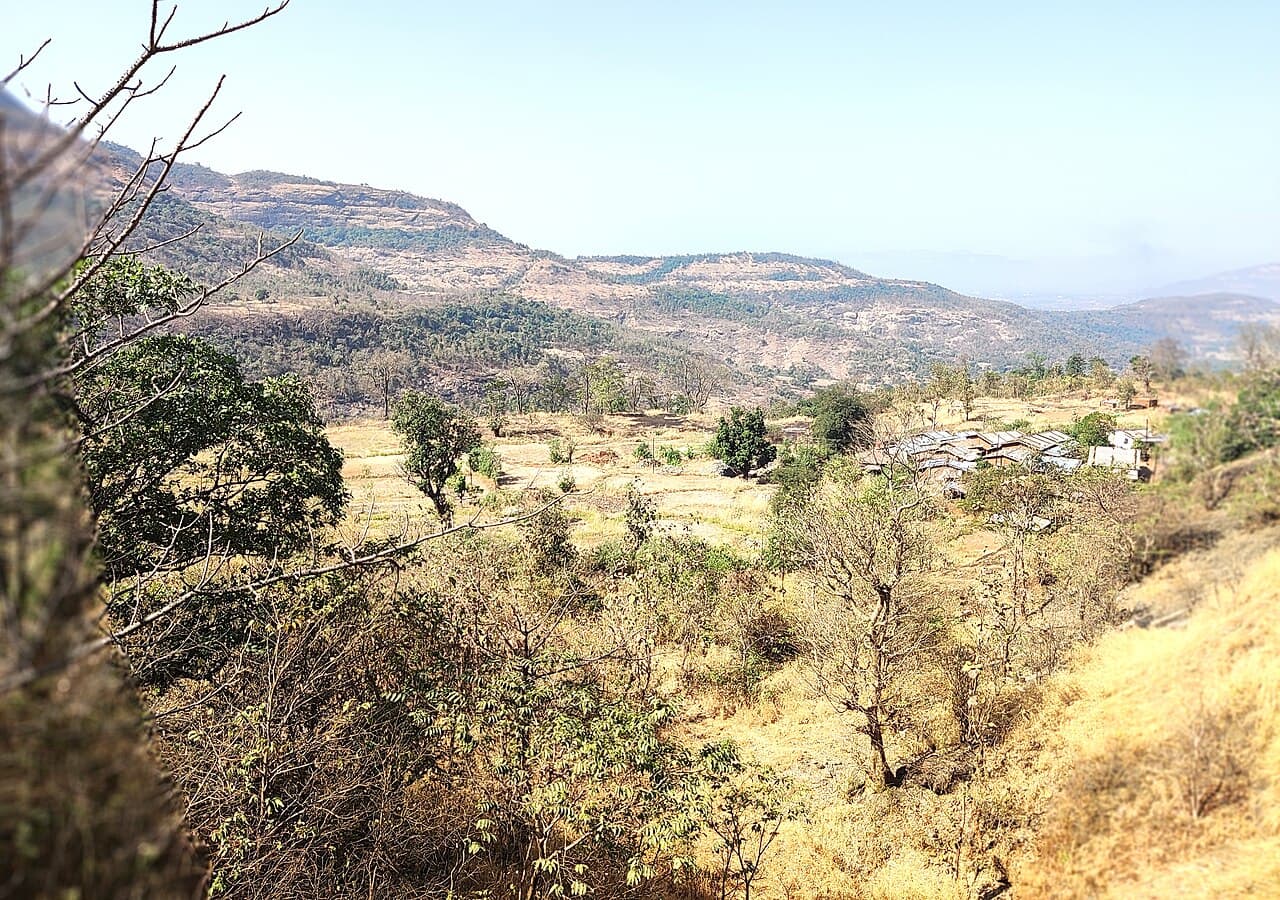
The most widely accepted explanation today is the activity of the Siberian Traps—a massive large igneous province in what is now Siberia, which erupted over several hundred thousand years and coincided in time with the extinction boundary to a precision of a few tens of thousands of years.
Its scale is difficult to fathom: the volume of lava is estimated at 1–4 million km³, whereas the largest eruptions ever recorded by humans rarely exceeded a few km³.
But lava was not the killer. What killed was what came with it:
CO₂ and greenhouse gases. The massive amount of carbon released caused global temperatures to rise sharply—oxygen isotope estimates indicate that tropical seawater warmed by about 8–10 °C.
Ocean acidification. CO₂ dissolving in seawater lowered pH, destroying the ability of corals, brachiopods, and many other marine organism groups to build calcium carbonate shells.
Anoxia. Warmer water holds less dissolved oxygen, and ocean circulation slowed down. Sediments from this period bear traces of widespread oceanic anoxia, and even sulfide toxicity.
Coal burning. Magma intruded through thick coal beds and hydrocarbon-bearing rock strata in the Tunguska Basin, burning them and releasing additional carbon alongside halogen gases that destroyed the ozone layer.
These four mechanisms unfolded in succession, which is why the extinction was prolonged rather than instantaneous.
A Hypothesis That Did Not Hold Up
In the early 2000s, a research team published findings of fullerene molecules containing helium-3 and argon-36—isotopes characteristic of extraterrestrial material—in Permian–Triassic boundary rocks. The conclusion drawn at the time was that an asteroid had caused the disaster, and this hypothesis was widely cited in popular science literature for over a decade.
That result was irreproducible. Multiple independent laboratories analyzed the same types of samples but found no similar signal. The "Bedout crater" structure off the coast of Australia, once proposed as a candidate, was also not accepted by the geological community. To date, the Permian–Triassic boundary lacks a global iridium layer, lacks shocked quartz, and lacks an impact crater—meaning it lacks the complete suite of evidence that the Cretaceous–Paleogene boundary of the dinosaur extinction fully possesses.
This is worth noting because it shows how science works: a high-profile result can still be discarded if no one can replicate it.
What Role Did Pangaea Play?
By the end of the Permian Period, all landmasses had merged into the supercontinent Pangaea. This did not directly cause the extinction, but it made everything worse:
- The area of shallow continental shelves—where most marine biodiversity was concentrated—shrank dramatically
- The continental climate became extreme, turning the interior into arid deserts
- Ocean circulation was simplified, making anoxic conditions spread more easily
A planet with its landmasses merged into a single block is a planet with less resilient ecosystems.
The Cost and the Gain
Among the groups wiped out were the trilobites—a group that had existed for the preceding 270 million years—and most groups of mammal-like reptiles (therapsids) that were on the path to evolving into mammals.
But the ecological void left by the extinction was precisely what paved the way for archosaurs, and subsequently dinosaurs, to dominate for the next 165 million years. Mammalian ancestors survived through a narrow margin, remaining small and evasive, awaiting their turn after the next extinction.
The Permian mass extinction is often cited as a warning, and not without reason: its primary killing mechanism—pumping carbon into the atmosphere faster than the Earth system could absorb it—is what humanity is doing today, only many times faster.
Adapted from the article Permian mass extinction, the bloodiest massacre in history by Đặng Vũ Tuấn Sơn, published on Astronomy Vietnam (VACA). Original content copyright belongs to VACA.
Further Reading
References
- [1]Đại tuyệt chủng Permi, vụ thảm sát đẫm máu nhất lịch sử — Thiên văn Việt Nam (VACA) — Đặng Vũ Tuấn Sơn (2012)
Image: Shyamal L. — Wikimedia Commons, CC0.