12 articles
The Solar System has eight planets — a number settled only in 2006, when the IAU set three criteria and Pluto failed the third.
Pluto lost nothing — the definition changed. It began with the 2005 discovery of Eris, more massive than Pluto, forcing astronomers to choose between many more planets or one fewer.
Eleven times wider than Earth, yet it turns once every 9 hours 55 minutes. Why Jupiter spins so fast — and what slowed it down.
The smallest planet and the closest to the Sun, where a day outlasts a year and the day-night temperature gap reaches 600°C.
Earth's twin in size, yet 464°C at the surface under 92 times our pressure - Venus shows how far a climate can slide.
Liquid water, an oxygen-rich atmosphere, a protective magnetosphere and plate tectonics - four rare conditions on one world.
It once had rivers, lakes and perhaps an ocean. Understanding how Mars lost its water is understanding how a world stops being habitable.
More massive than every other planet combined times 2.5, with a Great Red Spot storm at least 350 years old.
Rings spanning hundreds of thousands of kilometres yet ten metres thick in places, plus Enceladus venting salty water into space.
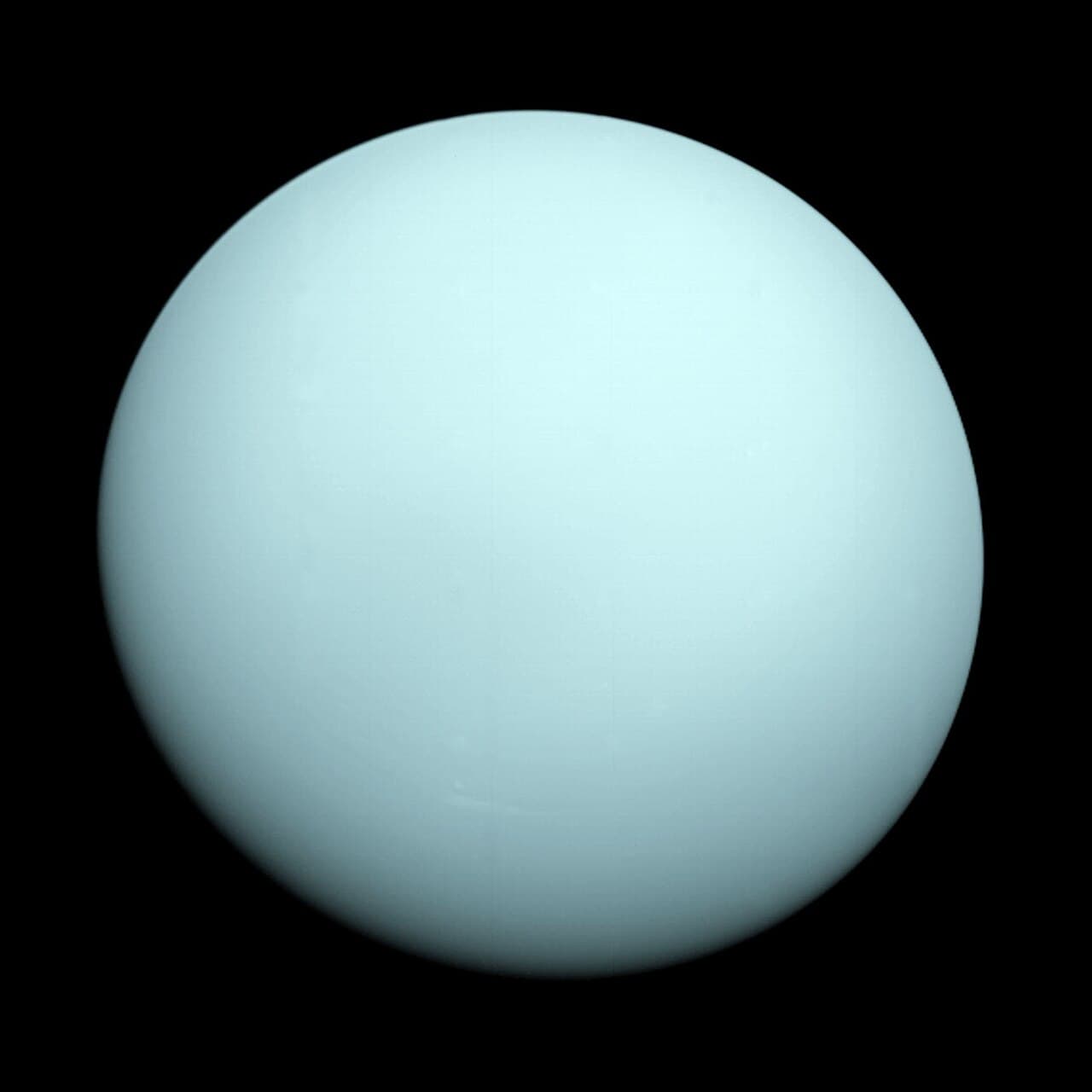
A 98° axial tilt gives each pole 42 years of continuous daylight followed by 42 years of night.
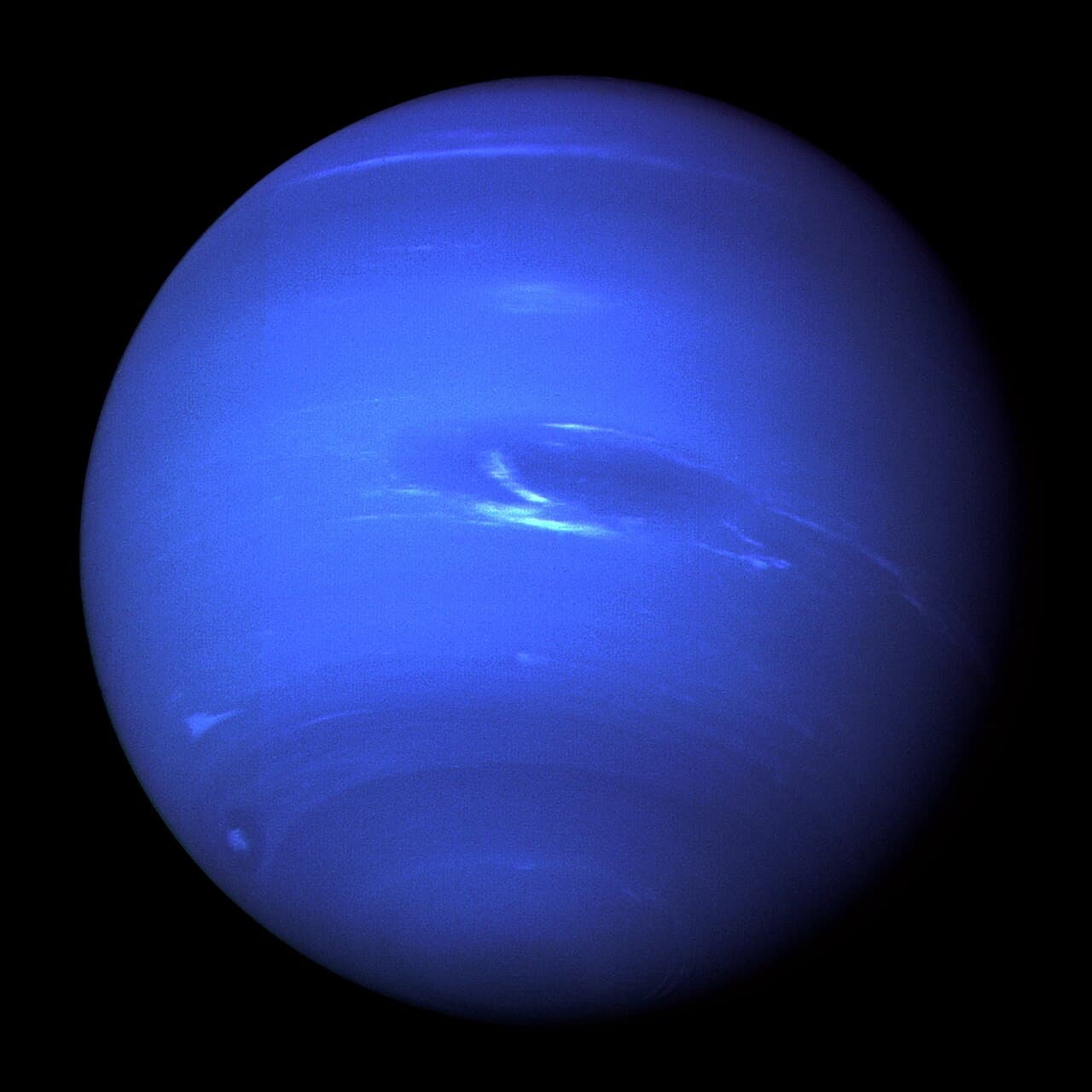
Predicted from orbital perturbations before anyone saw it, and home to the fastest winds in the Solar System.
A 6.5-metre infrared mirror parked 1.5 million km from Earth to observe the earliest galaxies.
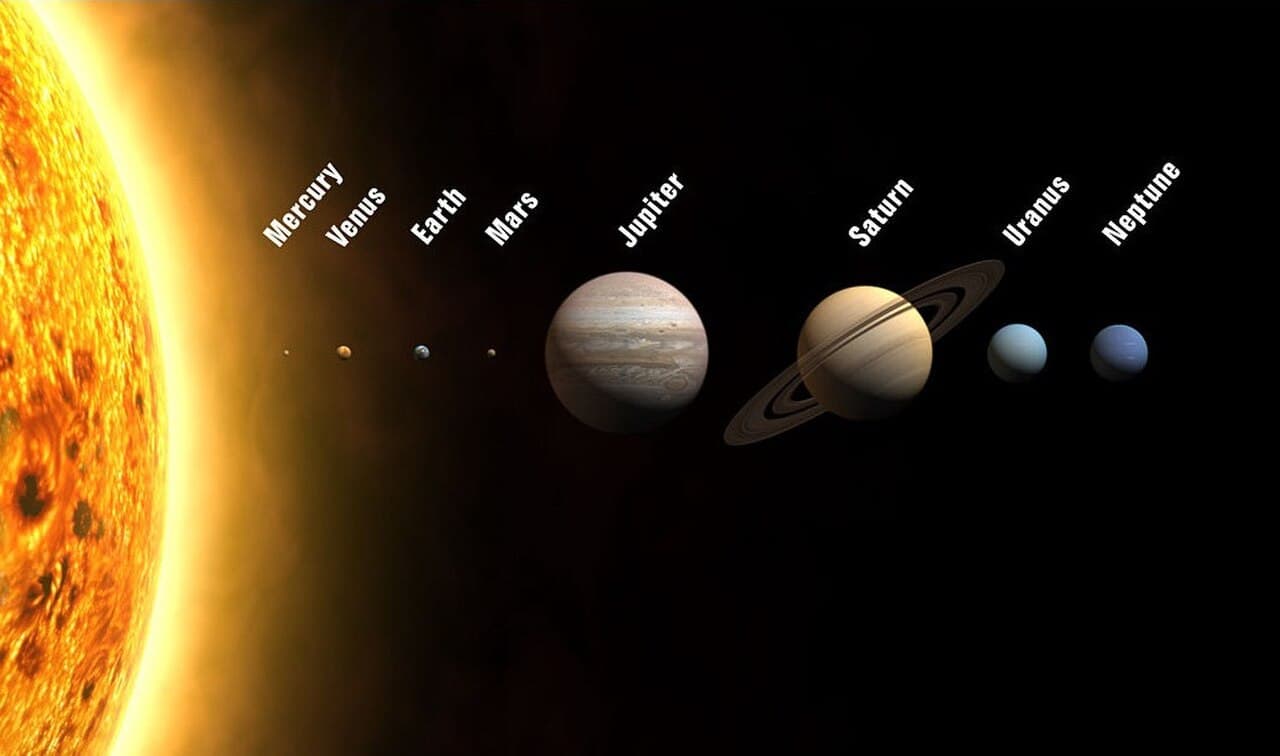 The Solar System