4 articles
The universe as a whole: the Big Bang, expansion, dark matter and dark energy, the fundamental forces and the particles behind everything.
Pulsar timing arrays (PTAs) recently detected an ultra-low-frequency gravitational-wave background permeating the universe. A 2026 study suggests this signal may originate not only from merging supermassive black hole binaries, but could also contain signatures of giant "dark stars" that existed over 13 billion years ago. If confirmed, these gravitational waves could help reveal the origins of the universe's earliest supermassive black holes.
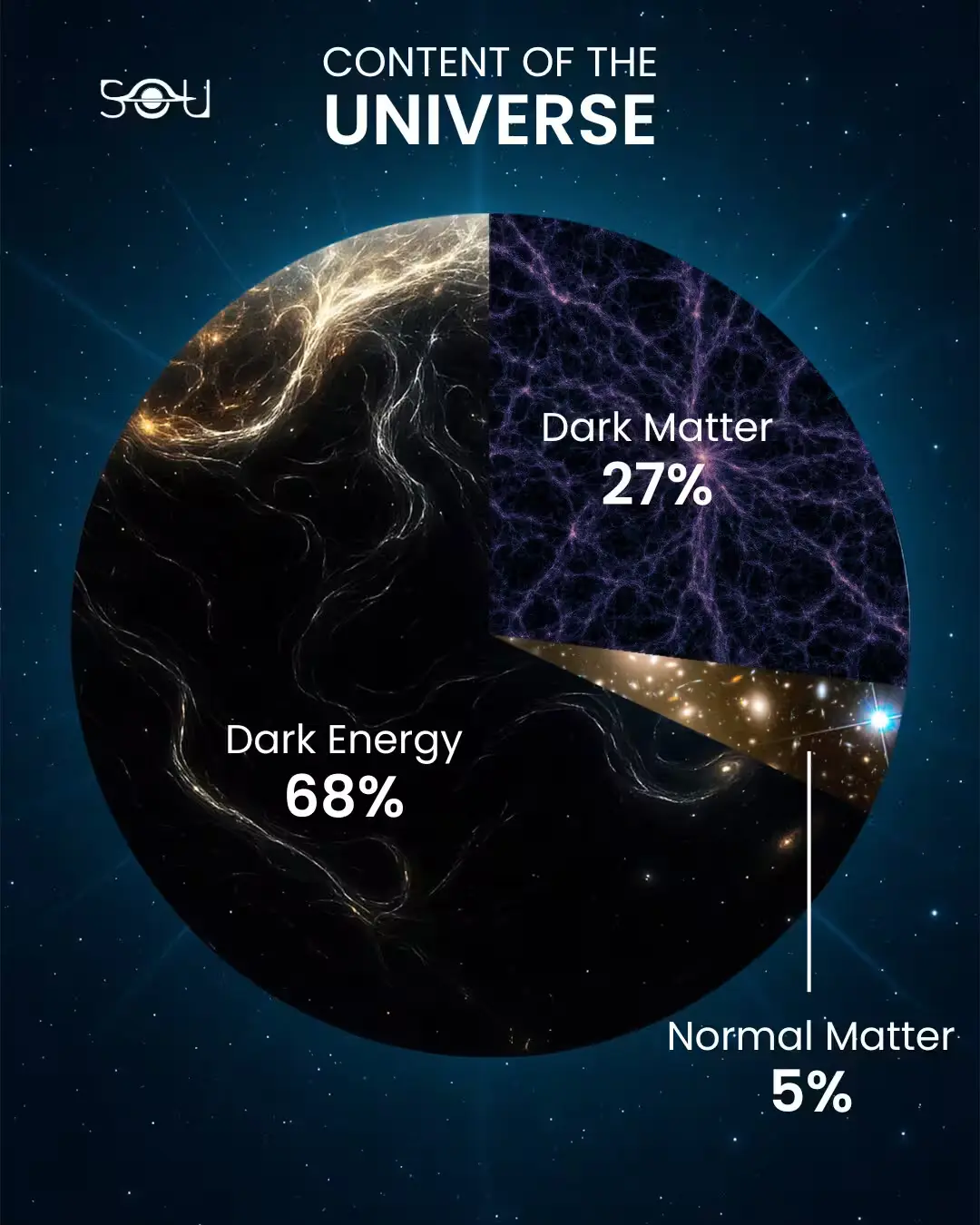
They share only the word "dark" and the fact that nobody has seen either. One pulls matter together, the other pushes space apart. Together they are 95% of the universe, and we do not know what either one is.
Not an explosion in space but the expansion of space itself. The timeline from 10⁻⁴³ seconds to today, the three pillars of evidence, and why the universe's fate was rewritten in 1998.
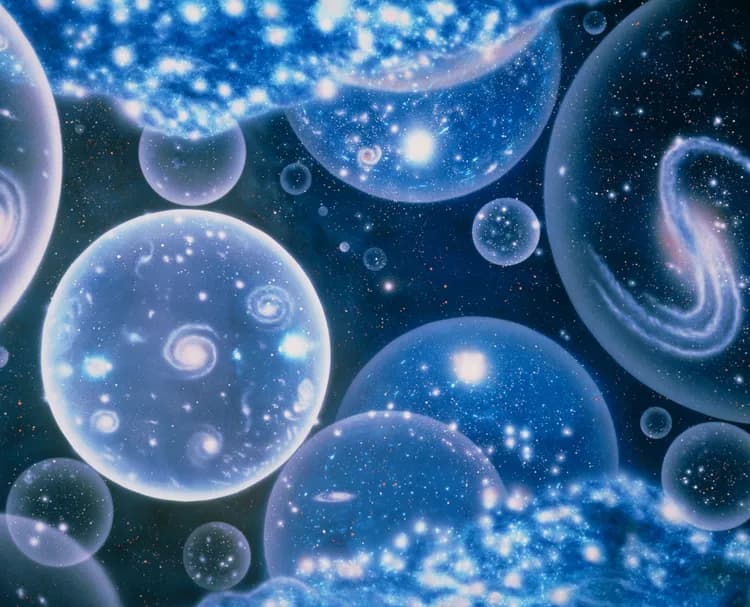
First, two things often confused: the observable universe has a boundary; the universe may not. Then Max Tegmark's four levels of multiverse — and whether any of it counts as science.