Contents
What is astrology based on?
Western astrology divides the zodiac into 12 signs and suggests that the positions of the Sun, the Moon, and the planets at the time of birth can influence a person's personality or destiny.
This system was constructed over 2,000 years ago and is still widely used in the form of familiar zodiac signs.
The sky has changed
The Earth's axis does not remain stationary but shifts slowly over time in a phenomenon called precession.
Therefore, the actual position of the Sun against the background of constellations today is significantly different from when the zodiac system was established. Furthermore, the path of the Sun also crosses 13 constellations, including Ophiuchus.
However, this is not a definitive argument against astrology, as many modern schools do not use the actual positions of constellations but instead rely on a specific conventional system.
The bigger problem: lack of a mechanism
To date, no known physical mechanism can explain how the apparent positions of the planets could influence human personality or life.
Measured physical forces do not show any significant influence from the planets on a newborn baby. Astrology also fails to provide an empirically testable mechanism.
However, science does not reject an idea simply because it lacks an explanation. What matters more is whether that idea passes objective testing.
When tested, results do not exceed chance
Many studies have examined the predictions of astrology using double-blind methods.
In a famous experiment published in the journal Nature in 1985, astrologers were asked to match natal charts with the personality profiles of participants. The results showed that the accuracy level was no higher than random chance.
Other studies on:
- Personality.
- Career.
- Marriage.
- Intelligence quotient.
also failed to find a reliable correlation with astrological charts.
Why do so many people still feel astrology is accurate?
A major reason is the Forer effect.
People are often prone to accepting vague and universal personality descriptions as if they were tailored specifically for them.
For example:
"You like to be recognized by others, but you sometimes also feel insecure."
Sentences like these can apply to most people, but they create a feeling of great accuracy when attached to a specific individual.
This effect, combined with confirmation bias—the tendency to remember the "hits" and forget the "misses"—makes astrology seem more reliable than it actually is.
Does that mean astrology is worthless?
Not necessarily.
Reading horoscopes or checking zodiac signs for entertainment is not much different from reading fiction or taking personality quizzes online.
The problem only arises when those predictions are presented as scientific conclusions or used to make important decisions regarding education, career, or relationships.
🔭 Astrology is not considered unscientific because it is ancient. Astronomy shares a similarly long history. The difference is that astronomy continuously passes empirical tests, whereas astrology has yet to prove a predictive ability better than chance.
Further reading
References
- [1]Sự phản khoa học của chiêm tinh học — Thiên văn Việt Nam (VACA) — Đặng Vũ Tuấn Sơn (2013)
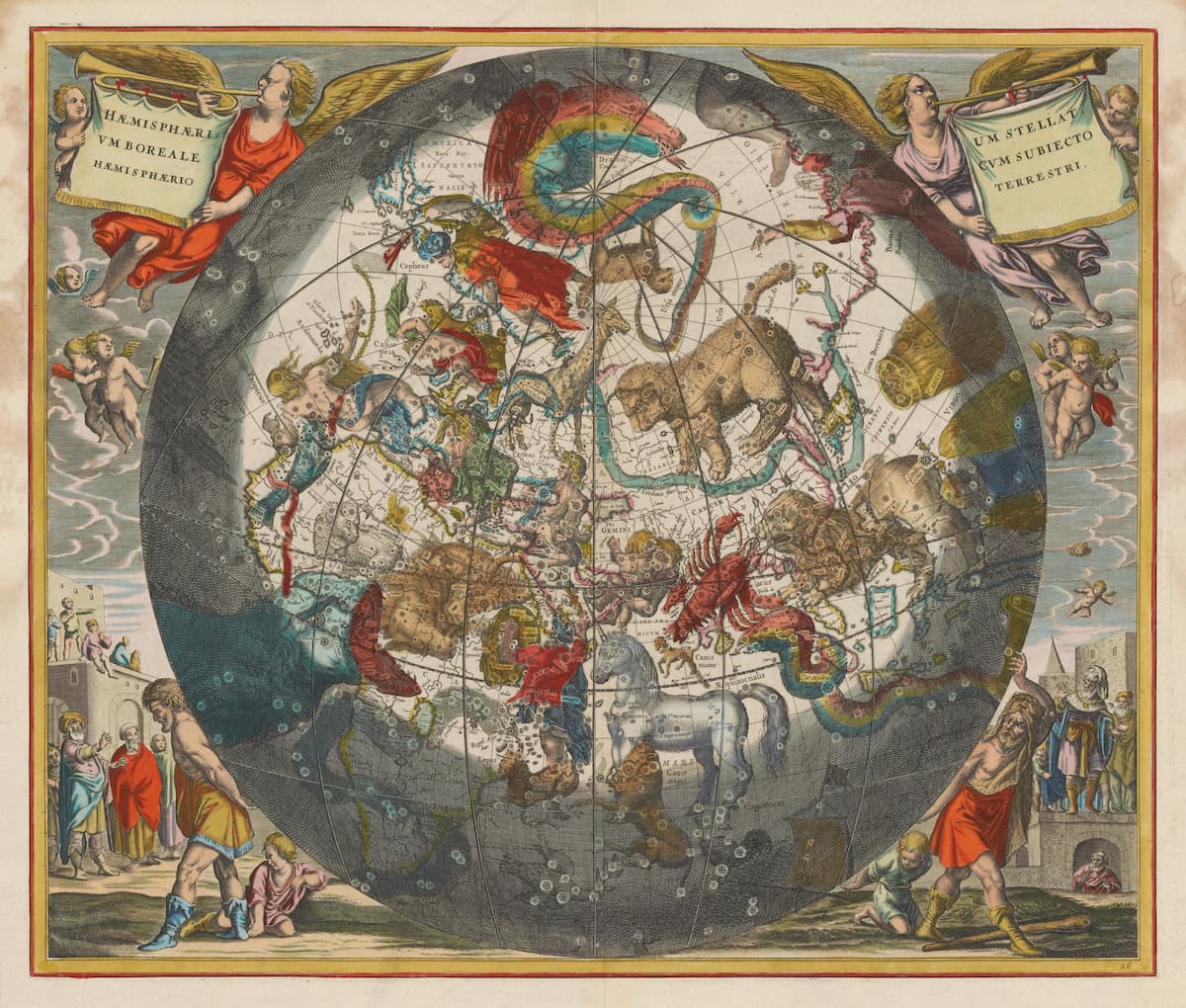
Andreas Cellarius, Harmonia Macrocosmica, 1660 — public domain


