5 articles
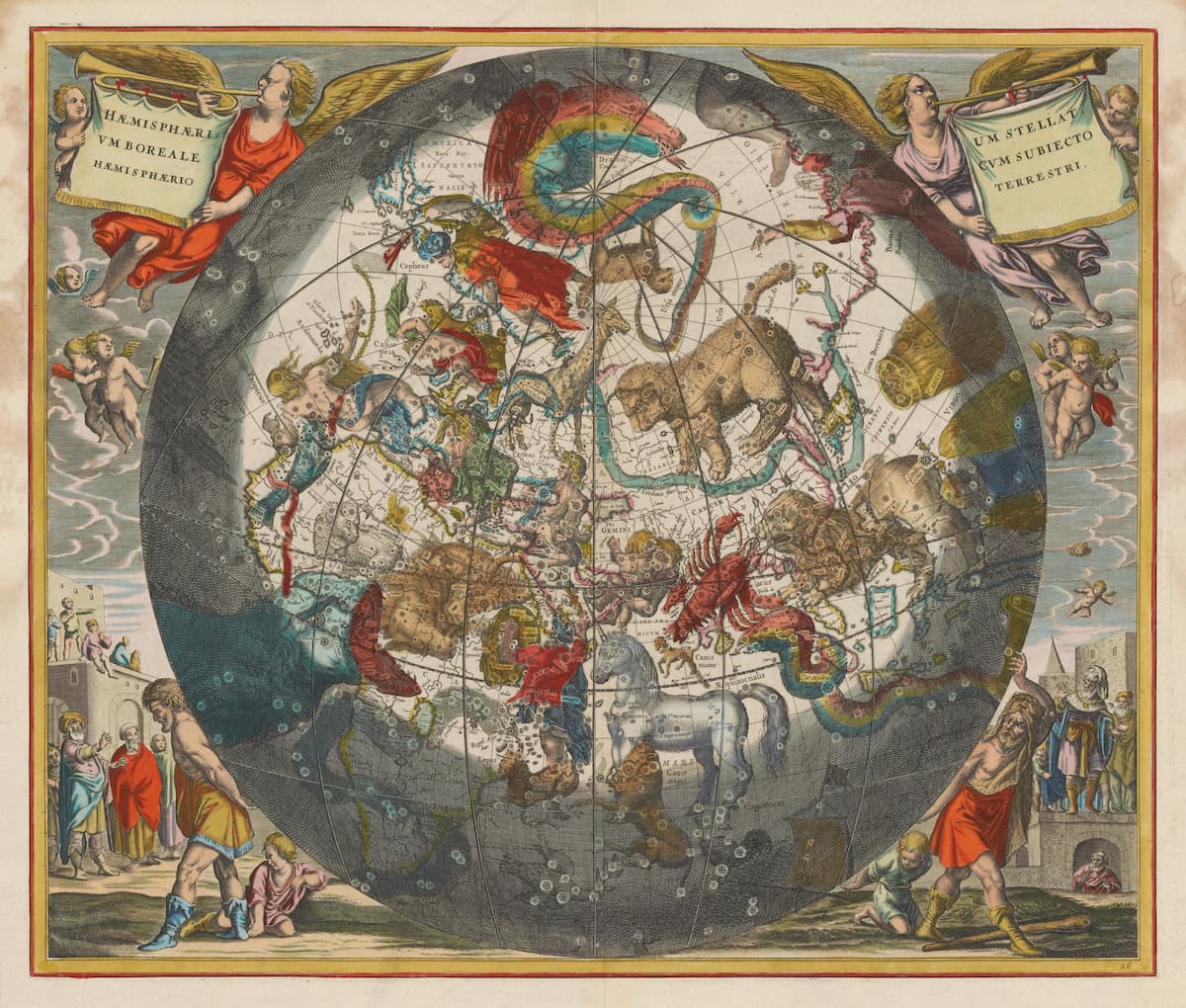
The celestial sphere, the constellations, the apparent motion of the Sun and planets, and the instruments for watching them yourself.
What arrives from the Sun is energy; the light itself comes from oxygen atoms and nitrogen molecules high in the atmosphere after electrons strike them — and the lifetime of each excited state is why each altitude has its own colour.
A solar eclipse is the Moon's shadow sweeping across Earth; a lunar eclipse is the Moon entering Earth's shadow. That difference sets how wide the viewing zone is, how long it lasts, and whether eye protection is required.
No single method stands alone: parallax calibrates Cepheids, Cepheids calibrate Type Ia supernovae, and those calibrate the Hubble constant — which is why a disagreement at the top forces a re-check of every rung below.
Not because it is old, nor because Earth's axis has shifted. The decisive reason is elsewhere: whenever it is tested double-blind, astrology performs no better than chance.
The ecliptic is the Sun's yearly path across the celestial sphere. Under the modern definition of constellation boundaries it crosses thirteen of them, not twelve.