Contents
A normal night's sleep consists of approximately 4–6 cycles, each lasting 90–110 minutes and passing through various stages.
Stages
| Stage | Proportion of time | Notable role |
|---|---|---|
| N1 | ~5% | Transition between wakefulness and sleep |
| N2 | ~45–55% | Appearance of sleep spindles |
| N3 — slow-wave deep sleep | ~15–25% | Consolidation of declarative memory, physical recovery |
| REM | ~20–25% | Procedural memory, emotional regulation, vivid dreams |
Notably: N3 is concentrated heavily in the first half of the night, while REM gradually lengthens toward morning. Cutting sleep short by the last two hours does not lose a "proportional share" of every stage—it cuts almost the entire REM portion.
How memory consolidation occurs
The most widely supported hypothesis is systems consolidation:
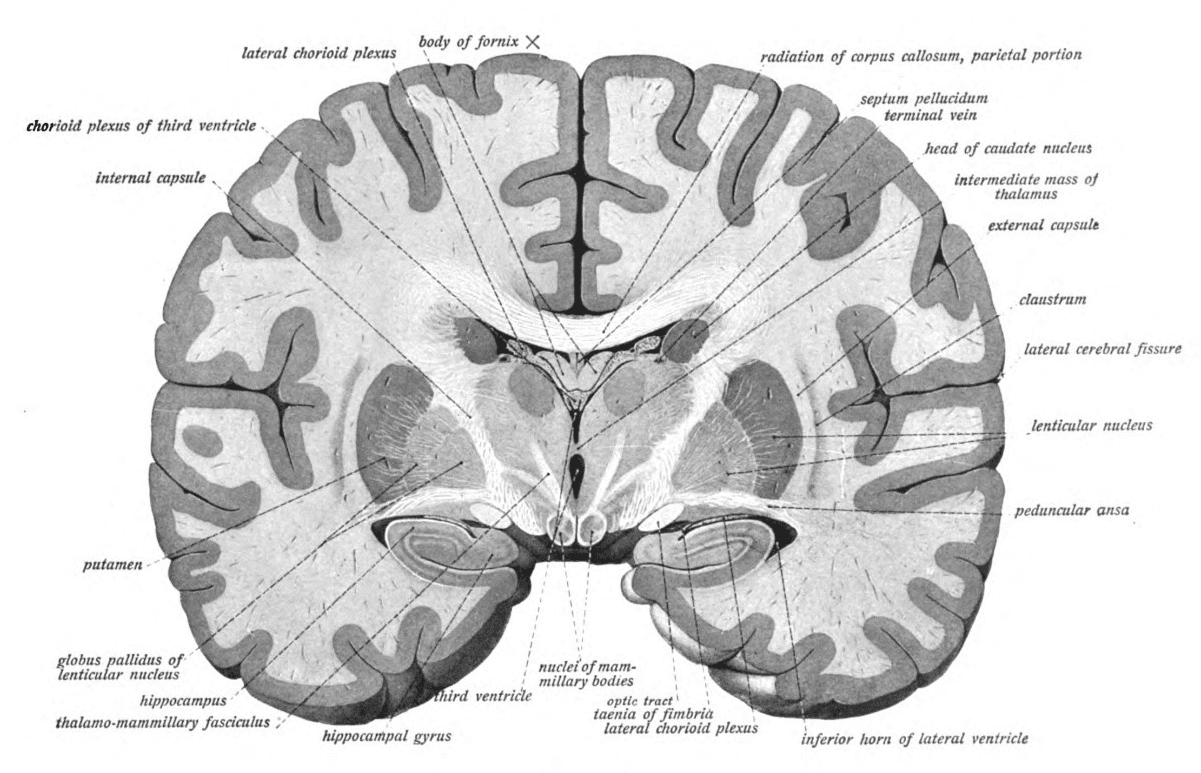
- During the day, the hippocampus records new experiences quickly but temporarily.
- During slow-wave sleep, the hippocampus "replays" these neural activity sequences at a compressed speed.
- The neocortex gradually receives and integrates the information into existing knowledge networks.
EEG experiments in animals show that the exact same sequence of place cells activated when the animal runs through a maze is replayed during sleep. Sleep spindles in stage N2 are thought to be markers of this transfer process—spindle density correlates with the level of memory improvement after sleep.
Waste clearance
In 2013, Maiken Nedergaard's group described the glymphatic system: the interstitial space in the brain expands by about 60% during sleep, allowing cerebrospinal fluid to flow through more forcefully and wash away metabolic products, including beta-amyloid—a protein that accumulates in Alzheimer's disease.
This is one of the reasons why chronic sleep deprivation is considered a risk factor for neurodegeneration, although the bidirectional causal relationship is still being researched.
How much sleep is enough
Sleep association recommendations for adults are 7–9 hours. A few points to note:
- "Debt" cannot be fully repaid. Catch-up sleep on weekends improves feelings of sleepiness but does not fully restore accumulated cognitive impairment.
- Consistency is as important as duration. Significant fluctuations in bedtime between days disrupt the circadian rhythm, similar to jet lag.
- Light is the strongest signal. Evening blue light inhibits melatonin and delays the onset of sleepiness.
Recommended actions, based on evidence
- Maintain a consistent wake-up time, including on weekends
- Get outdoors into the light within one hour of waking up
- Avoid caffeine after noon—its half-life is about 5–6 hours
- Keep the bedroom dark and cool (around 18–20°C)
- If you can't fall asleep after 20 minutes, get out of bed and do something quiet
This article provides scientific information for reference purposes and does not replace the advice, diagnosis, or treatment of medical professionals. If you have specific health concerns, please discuss them with a doctor.
Read more
References
- [1]Sleep drives metabolite clearance from the adult brain — Science (2013)
- [2]About Sleep's Role in Memory — Physiological Reviews (2013)
Johannes Sobotta, Atlas of Human Anatomy, 1909 — public domain


