Contents
Archival material. This article presents the content of the document Phương pháp Tác động Cột sống Việt Nam ("Vietnamese Spinal Impact Method"; Hanoi Spinal Impact Association — Hanoi Association of Traditional Medicine) for archiving, research and reference. Quoted passages are the document's own words, not medical conclusions of Sciencepedia, and they do not replace diagnosis or treatment by a health professional.
⚠️ When it is an emergency
The NHS advises going to A&E or calling emergency services if you:
- have sciatica on both sides;
- have weakness or numbness in both legs that is severe or getting worse;
- have numbness around or under your genitals, or around your anus;
- find it hard to start peeing, cannot pee or cannot control when you pee — and this is not normal for you;
- do not notice when you need to poo or cannot control it — and this is not normal for you.
The NHS says these could be symptoms of a serious back problem that needs hospital treatment as soon as possible. MedlinePlus advises contacting a health professional right away for signs such as unexplained fever with back pain, back pain after a severe blow or fall, pain travelling below the knee, or loss of control of urine or stool.
According to a review by Kuris and colleagues (The American Journal of Medicine, 2021), cauda equina syndrome results from conditions that compress the nerves in the lumbosacral spinal canal and is a potentially devastating spinal condition. Once it is suspected, emergent spinal surgery referral is indicated, along with urgent decompression. Even with expeditious surgery, improvements remain inconsistent; however, early intervention has been shown to portend a greater chance of neurological recovery.
A review by Long and colleagues (The American Journal of Emergency Medicine, 2020) describes it as a rare but emergent condition that can have a variety of causes, most commonly vertebral disc protrusion. The red flags it lists include bilateral neurogenic sciatica, reduced perineal sensation, altered bladder function leading to painless urinary retention, loss of anal tone, and loss of sexual function. Symptoms may come on suddenly or gradually, and most patients do not have all of these symptoms. Treatment relies on surgical consultation and operative decompression.
What is sciatica?
According to MedlinePlus, sciatica is pain, weakness, numbness or tingling in the leg caused by injury to or pressure on the sciatic nerve. It is a symptom of another medical problem, not a condition by itself.
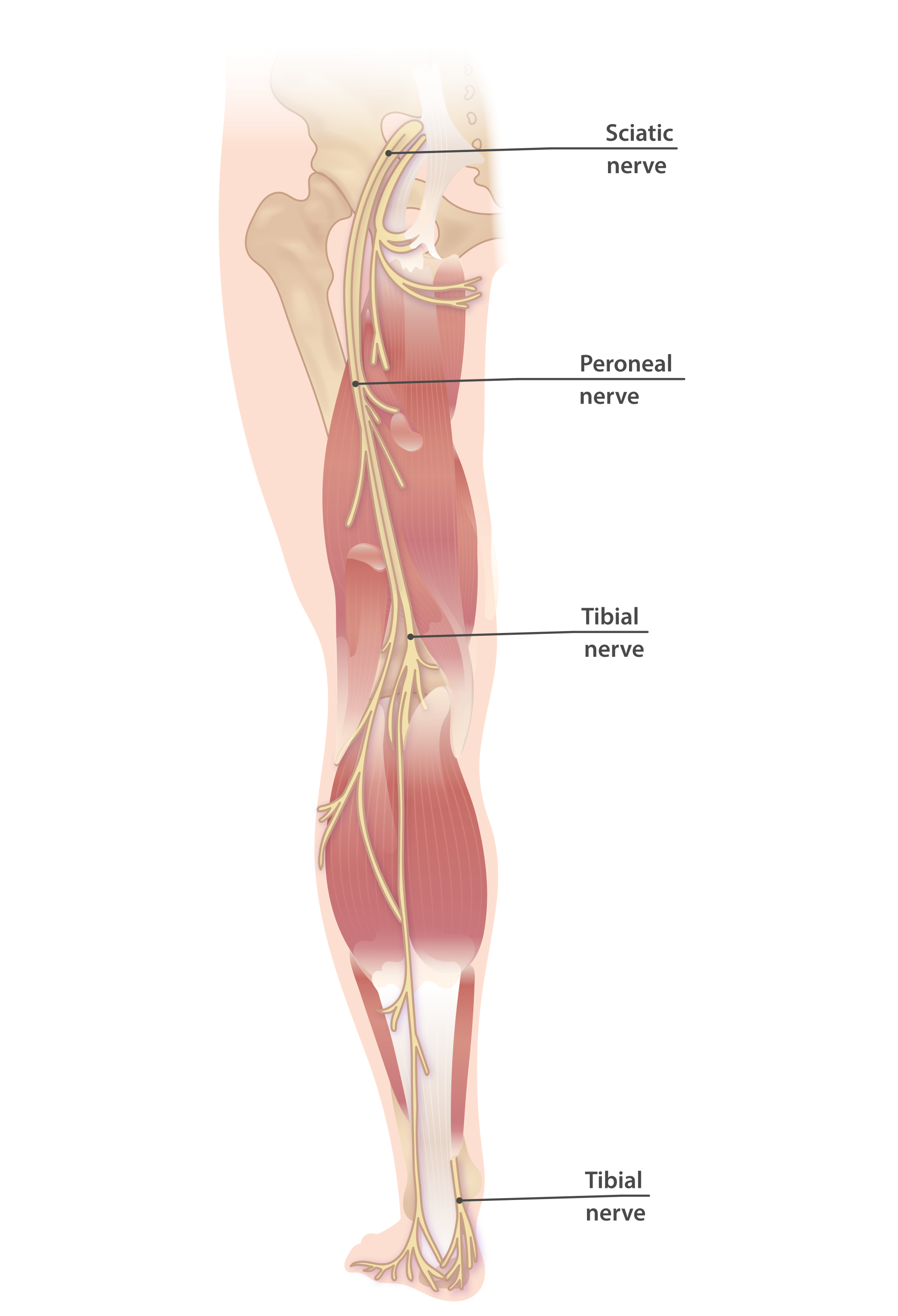
The sciatic nerve starts in the lower back and runs down the back of each leg (MedlinePlus); the NHS describes it as running from the lower back to the feet. Symptoms usually affect the buttock and the back of one leg, often including the foot and toes (NHS). The NHS also notes that if you only have back pain, you probably do not have sciatica.
NINDS lists sciatica as an example of neuropathic pain — pain caused by nerve damage, often described as burning, tingling, shooting, or like electric shocks.
Causes and course
According to the NHS, the most common cause is a slipped disc — when a soft cushion of tissue between the bones of the spine pushes out — and it becomes more likely with age. Other causes include spinal stenosis (narrowing of the part of the spine where nerves pass through) and spondylolisthesis (a spinal bone slipping out of position). Because sciatica is a symptom, MedlinePlus stresses that the underlying cause should be identified and treated.
Sciatica usually improves within a few weeks to a few months but can last longer (NHS), and it commonly returns (MedlinePlus). MedlinePlus also notes that it can lead to permanent numbness or weakness of the leg.
Symptoms described in the document
Sciatic nerve pain usually shows the following restriction signs: 1. the painful-point sign (spelled "Walleix" in the original); 2. restricted forward bending while standing; 3. restricted "ngồi sổm" (as printed; the standard spelling is "ngồi xổm", squatting, which the document itself uses on p. 8); 4. restricted leg raising; 5. restricted spinal stretching; 6. restricted fast walking.
Content according to the Spinal Impact method
Restricted forward bending
The patient stands straight with feet shoulder-width apart, knees kept straight, and slowly bends forward; if both index fingers can touch the big toes it is normal, if they cannot reach the big toes it is restricted.
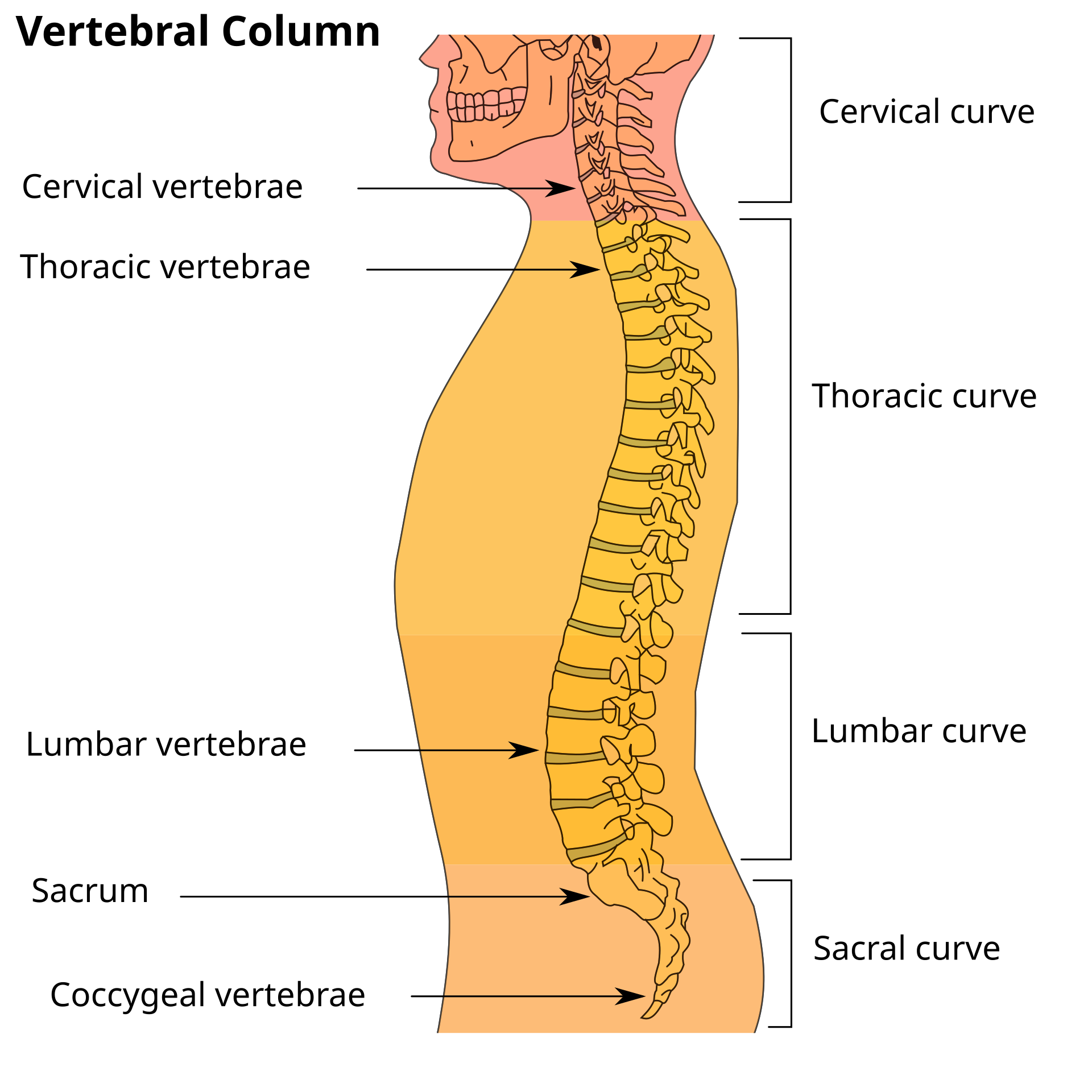
The key points are usually in the region of T2, T3, T7, T8.
Vertebrae named by the document:
The document's note on the lumbosacral region
People with sciatic nerve pain often walk in a pain-relieving posture, leaning to one side. Treatment cannot start right at L4, L5 and S1, S2; instead the corresponding-muscle-contraction approach is applied, working from the upper back downwards. Treating L4, 5 and S1, 2 is the final stage.
Vertebrae named by the document:
Where the document says the method does not apply
The "bell-pulling" phenomenon or being unable to push with the foot is due to inflammation of the cauda equina, or spinal cord tumours and spinal meningeal tumours… none of these are treated with Spinal Impact (medication is required).
Further reading
- Acupoints and acupuncture: how does the "Qi" of Eastern medicine relate to modern science?
- The "chemical messengers" that run the brain
- How does stress affect the body, and why does exercise help us unwind?
More from the Spinal Impact series:
Source document
The document Phương pháp Tác động Cột sống Việt Nam ("Vietnamese Spinal Impact Method"; Hanoi Spinal Impact Association — Hanoi Association of Traditional Medicine), section "III. ĐAU THẦN KINH TOẠ", book pages 6–10 (scan pages 7–11). The page-by-page transcription is kept with the Sciencepedia source code.
🩺 This content is for archiving, research and reference. If you have symptoms, please see a health professional for diagnosis and treatment.
References
- [1]Evaluation and Management of Cauda Equina Syndrome — Kuris EO, McDonald CL, Palumbo MA, Daniels AH — The American Journal of Medicine 134(12):1483–1489 (2021)
- [2]Evaluation and management of cauda equina syndrome in the emergency department — Long B, Koyfman A, Gottlieb M — The American Journal of Emergency Medicine 38(1):143–148 (2020)
- [3]Sciatica — MedlinePlus — U.S. National Library of Medicine
- [4]Sciatica — NHS
- [5]Pain — National Institute of Neurological Disorders and Stroke (NIH)
- [6]Phương pháp Tác động Cột sống Việt Nam — Một số bệnh thường gặp và hướng điều trị — III. ĐAU THẦN KINH TOẠ, tr. 6–10 — Chi hội Tác động cột sống Hà Nội — Hội Đông y thành phố Hà Nội
Image: InjuryMap — Wikimedia Commons, CC BY-SA 4.0.