Contents
- ⚠️ When it is an emergency
- What is migraine?
- What is known about cause and treatment
- Symptoms described in the document
- Content according to the Spinal Impact method
- Seeing flashes ("fireflies")
- Heavy head, insomnia, nausea, circulatory disturbance
- Numbness of the arms and fingertips
- Tiredness, frequent yawning, belching
- Difficulty speaking, not understanding speech or text
- Ache at the back of one side of the head, spreading to the eye socket
- Ache at the temples
- Ache at the forehead and eye sockets
- Double vision, drooping eyelid
- Mild paralysis of the upper limb and difficulty speaking
- Further reading
- Source document
Archival material. This article presents the content of the document Phương pháp Tác động Cột sống Việt Nam ("Vietnamese Spinal Impact Method"; Hanoi Spinal Impact Association — Hanoi Association of Traditional Medicine) for archiving, research and reference. Quoted passages are the document's own words, not medical conclusions of Sciencepedia, and they do not replace diagnosis or treatment by a health professional.
⚠️ When it is an emergency
The NHS advises calling emergency services if you or your child:
- have a headache that came on suddenly and is extremely painful;
- have problems speaking or remembering things;
- lose your vision, or have blurred or double vision;
- have a very high temperature and symptoms of meningitis;
- cannot move, or have weakness in the arm, leg or face on one side of the body.
MedlinePlus also advises calling emergency services for the worst headache of your life, or speech, vision or movement problems or loss of balance — especially if earlier migraines never caused them. A sudden, explosive headache needs medical attention right away because it may be due to a ruptured blood vessel in the brain. Headache with fever, stiff neck, nausea and vomiting, or newly starting headaches — especially over age 50 — also need medical help right away (MedlinePlus). The NHS advises an urgent GP appointment if a migraine attack has lasted longer than 72 hours, or if aura symptoms last longer than 1 hour at a time.
Some of the quoted sections below are named after symptoms such as difficulty speaking, double vision or mild paralysis of the upper limb. According to the NHS, problems speaking, double vision, or weakness in the arm, leg or face on one side of the body are reasons to call emergency services, as in the list above.
What is migraine?
According to NINDS, migraine is a health condition that is more than having a bad headache. One of the most common symptoms of a migraine episode is moderate to severe throbbing pain that usually happens on one side of the head. MedlinePlus says it may come with nausea, vomiting, or sensitivity to light and sound.
According to the NHS, migraine attacks usually last between 4 hours and 3 days. Only some people have an aura: NINDS says auras appear about 10 minutes to an hour before the episode and usually last no more than an hour. The most common type is migraine without aura (NINDS).
What is known about cause and treatment
The NHS says it is not known what causes migraine, but that it happens when there are changes to nerves and blood vessels in the brain. According to NINDS, current research shows that migraine head pain happens when nerve signals, brain chemicals and blood vessels are not working properly in the brain; MedlinePlus notes that the exact chain of events remains unclear.
There is no specific test to prove that a headache is a migraine, and only a health professional can determine whether symptoms are due to migraine or another condition (MedlinePlus). There is currently no cure for migraine, but treatments can help manage symptoms (NINDS).
Symptoms described in the document
At first the pain is on one side of the head only, at the forehead or temple, rarely at the back of the head. Then it may gradually spread to the whole head or to the opposite half.
Accompanying symptoms are nausea, circulatory disturbances such as a slow pulse, possibly slightly raised blood pressure, and sensitivity to smells. The pain usually lasts from a few hours to 3 days, fading at night or leaving a dull ache in the head the next day.
Migraine with aura: the headache begins with an aura, meaning focal neurological symptoms of the cerebral cortex that develop gradually over 6 to 20 minutes and last less than 60 minutes. … The aura may be a visual disturbance with double vision, a squint on the same side as the pain; …
… weakness of one side of the body, mild paralysis of the upper limb, loss of language, difficulty speaking. The aura lasts less than 60 minutes and resolves completely. This is an important sign for distinguishing them from patients who do not have migraine with aura.
Content according to the Spinal Impact method
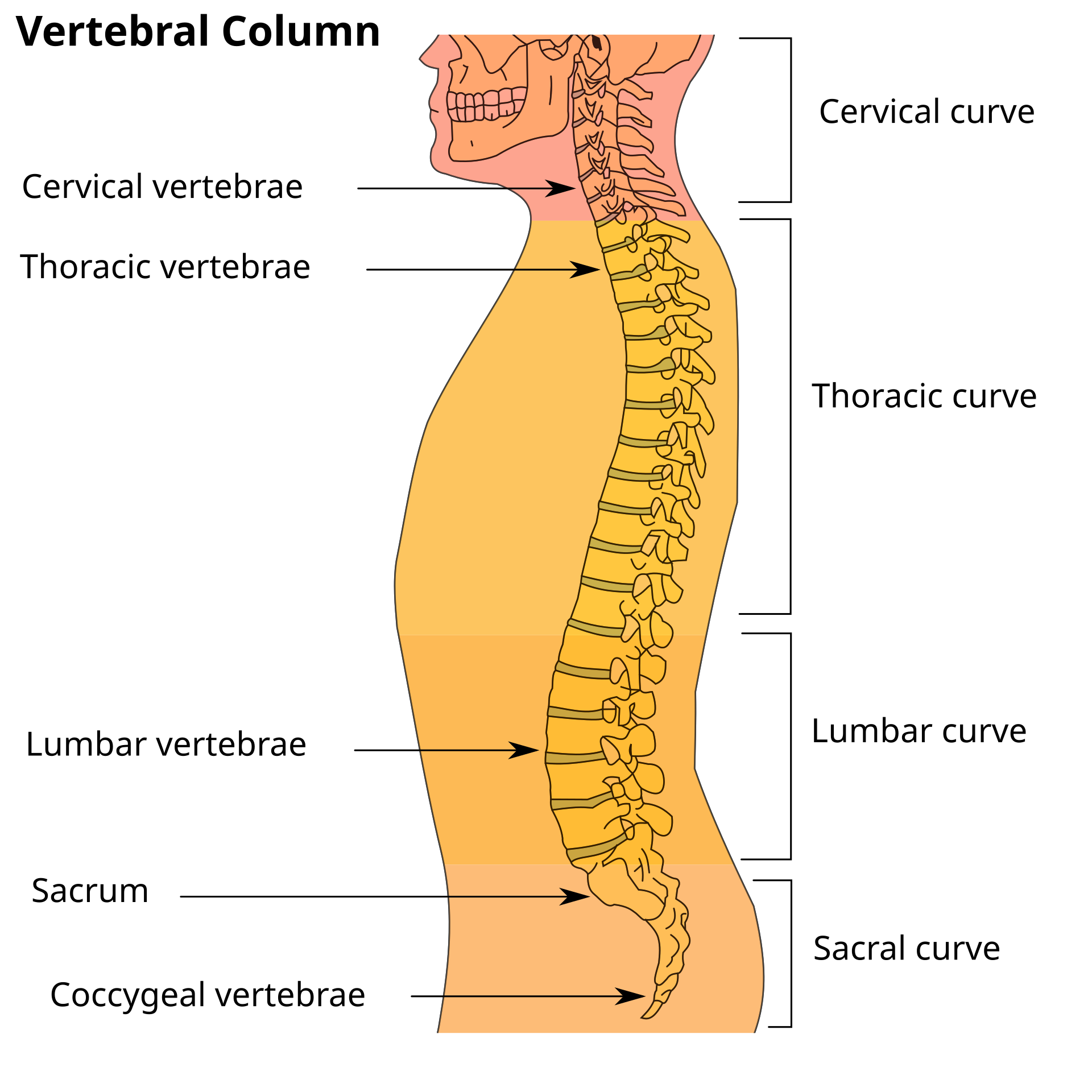
The Vietnamese Spinal Impact method relies on changes in skin temperature, changes in the muscle segments along the spine, changes in the vertebrae related to the symptoms, and the objective sensations over those vertebrae, in order to identify key vertebrae and release those key points to treat the symptoms.
Seeing flashes ("fireflies")
Skin temperature is high over the patient's left chest, right shoulder and right flank. Related to disturbed circulatory, respiratory and liver functions. The key vertebrae are C6, T9, T10, T11.
Vertebrae named by the document:
Heavy head, insomnia, nausea, circulatory disturbance
Temperature is high over the left chest. Related to circulatory and respiratory functions. The key vertebrae are T3, T6.
Vertebrae named by the document:
Numbness of the arms and fingertips
Temperature is disturbed (high) over the back of the head, the right side of the neck and the epigastrium; related to disturbed lung, stomach and colon functions. The key vertebrae are C7, L1, L3.
Vertebrae named by the document:
Tiredness, frequent yawning, belching
Temperature is disturbed over the left chest. Related to disturbed colon and cardiovascular functions. The key vertebrae are T6, T7, T9.
Vertebrae named by the document:
Difficulty speaking, not understanding speech or text
Temperature is disturbed over the back of the head. Related to disturbed colon and cardiovascular functions. The key vertebra is S5.
Vertebrae named by the document:
- Key point: S5
Ache at the back of one side of the head, spreading to the eye socket
Temperature is disturbed over the back of the head, the eye socket, the right shoulder and the epigastrium. Related to disturbed nervous and lung functions. The key vertebrae are C1, C3, C5, C6, T11.
Vertebrae named by the document:
Ache at the temples
Temperature is disturbed over the right shoulder and the epigastrium. Related to disturbed respiratory and stomach functions. The key vertebrae are T11, L1.
Vertebrae named by the document:
Ache at the forehead and eye sockets
Temperature is disturbed over the right shoulder. Related to disturbed respiratory function. The key vertebrae are T10, T11.
Vertebrae named by the document:
Double vision, drooping eyelid
Local temperature around the eye is high. Related to disturbed nervous function. The key vertebra is C7.
Vertebrae named by the document:
- Key point: C7
Mild paralysis of the upper limb and difficulty speaking
Temperature is disturbed over the upper back. Related to disturbed circulatory and respiratory functions. The key vertebrae are C6, T1.
Vertebrae named by the document:
Further reading
- Acupoints and acupuncture: how does the "Qi" of Eastern medicine relate to modern science?
- The "chemical messengers" that run the brain
- Sleep deprivation: a debt secured against your health and your future
More from the Spinal Impact series:
Source document
The document Phương pháp Tác động Cột sống Việt Nam ("Vietnamese Spinal Impact Method"; Hanoi Spinal Impact Association — Hanoi Association of Traditional Medicine), section "IV. ĐAU NỬA ĐẦU (MIGRAINE)", book pages 11–13 (scan pages 12–14). The page-by-page transcription is kept with the Sciencepedia source code.
🩺 This content is for archiving, research and reference. If you have symptoms, please see a health professional for diagnosis and treatment.
References
- [1]Migraine — National Institute of Neurological Disorders and Stroke (NIH)
- [2]Migraine — MedlinePlus — U.S. National Library of Medicine
- [3]Migraine — NHS
- [4]Headache — MedlinePlus — U.S. National Library of Medicine
- [5]Phương pháp Tác động Cột sống Việt Nam — Một số bệnh thường gặp và hướng điều trị — IV. ĐAU NỬA ĐẦU (MIGRAINE), tr. 11–13 — Chi hội Tác động cột sống Hà Nội — Hội Đông y thành phố Hà Nội
Image: DrJanaOfficial — Wikimedia Commons, CC BY-SA 4.0.